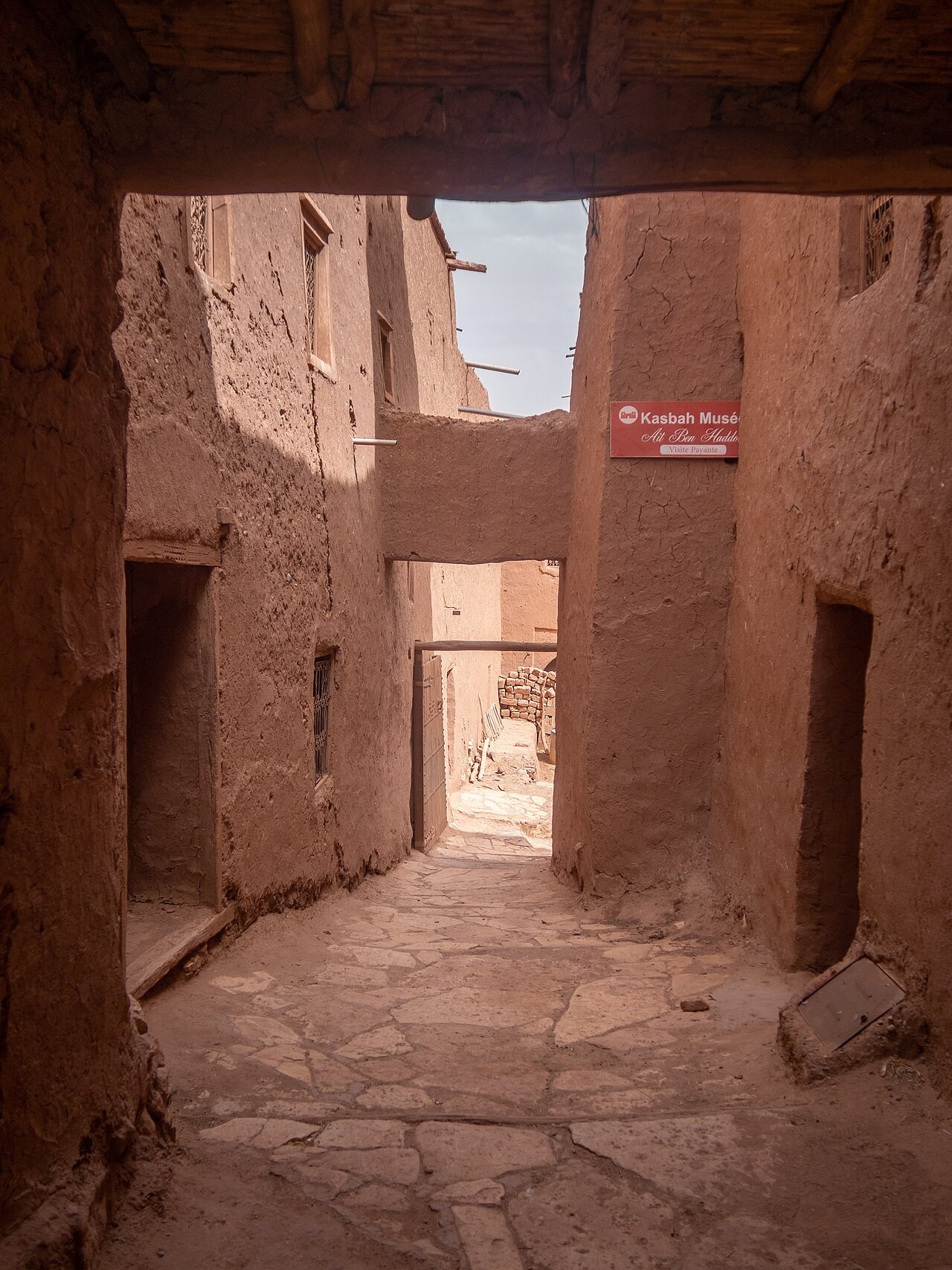
Aït-Ben-Haddou enter UNESCO World Heritage List for 1987 as example of southern Morocco earth architecture. Fortified settlement stand for Ounila Valley, for southern foothills of High Atlas inside Ouarzazate Province. This na historical background of the place, no be new designation wey dem just announce.
Ksar na settlement wey people share, no be only one big residence. For Aït-Ben-Haddou, defensive walls and corner towers surround houses wey gather close together. Some houses simple, while bigger ones get high towers and decorative patterns from clay brick. That difference belong to community and architecture history.
Shared spaces matter too when person dey understand site. UNESCO list mosque, public square, caravanserai, fortification and grain-storage building, with threshing areas outside walls. Muslim and Jewish cemeteries plus Sidi Ali or Amer sanctuary add more layers to the settlement history.
Settlement be trading post for route wey link historic Sudan region with Marrakesh through Dra Valley and Tizi-n'Telouet Pass. For this account, Sudan mean historical trading region wey UNESCO name. Route help explain why accommodation, storage and protection wey people share matter for the place.
UNESCO say oldest surviving structures no appear earlier than seventeenth century, although building methods get older regional roots. Earth and wood na main materials. Conservation account wey carry 2009 date stress say architecture need regular maintenance; person no suppose treat am as new condition survey.
For visitor, useful angle na to look beyond towers and notice how homes, lanes and community buildings connect. Heritage value dey inside that connected settlement. The 1987 recognition celebrate building tradition and how people organise space, no be only fine background for photograph.