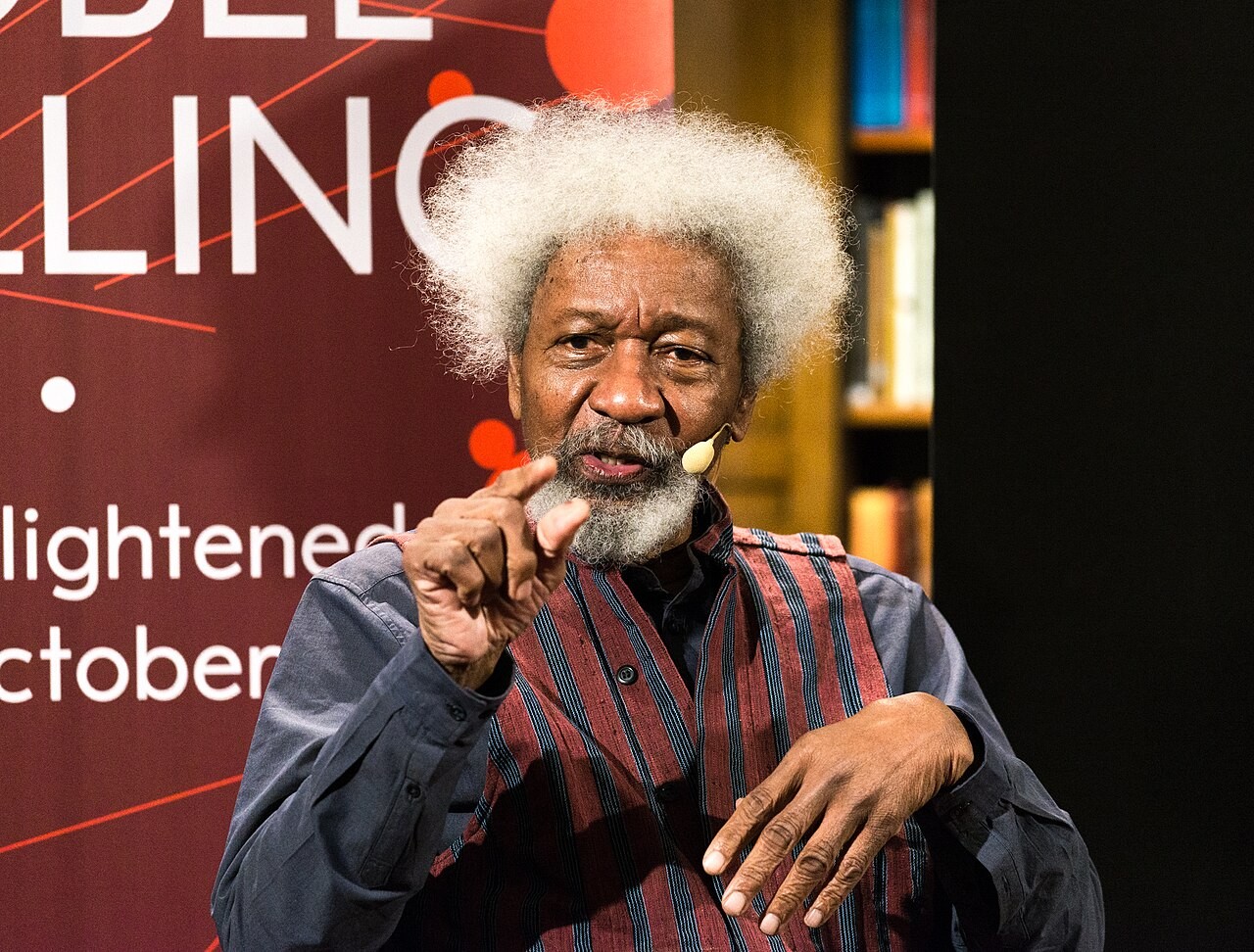
Wole Soyinka received the Nobel Prize in Literature in 1986. Looking back at that achievement means looking beyond an award photograph: the Nigerian writer had already built a body of drama, poetry, fiction and criticism. This is a historical account of that recognition, not an announcement of a new prize.
Born in Abeokuta in 1934, Soyinka studied in Nigeria and Britain and worked at London's Royal Court Theatre. The Nobel biography also records his return to Nigeria in 1960 to study African drama. His career therefore joined literary study to the practical work of making performances happen.
He founded the 1960 Masks and later the Orisun Theatre Company. Those details matter because a play becomes public through actors, rehearsal and an audience, not through a writer's name alone. His achievement can be understood partly through the theatrical institutions he helped create.
Soyinka writes in English while drawing deeply on Yoruba stories, beliefs and performance traditions. Nobel's account also identifies connections with European dramatic traditions. Reading him only as an example of imported theatre misses the creative work involved in bringing distinct sources into conversation.
His plays include The Lion and the Jewel and Death and the King's Horseman; his writing also extends to memoir and essays. Readers approaching the work for the first time can compare a performed scene with the printed text, noticing what gesture, music or silence adds.
The lasting value of the 1986 award is an invitation to encounter that work directly. A prize establishes a historical distinction, but it cannot substitute for reading, staging or debating the writing. For schools and theatres, Soyinka's career offers material for all three activities.