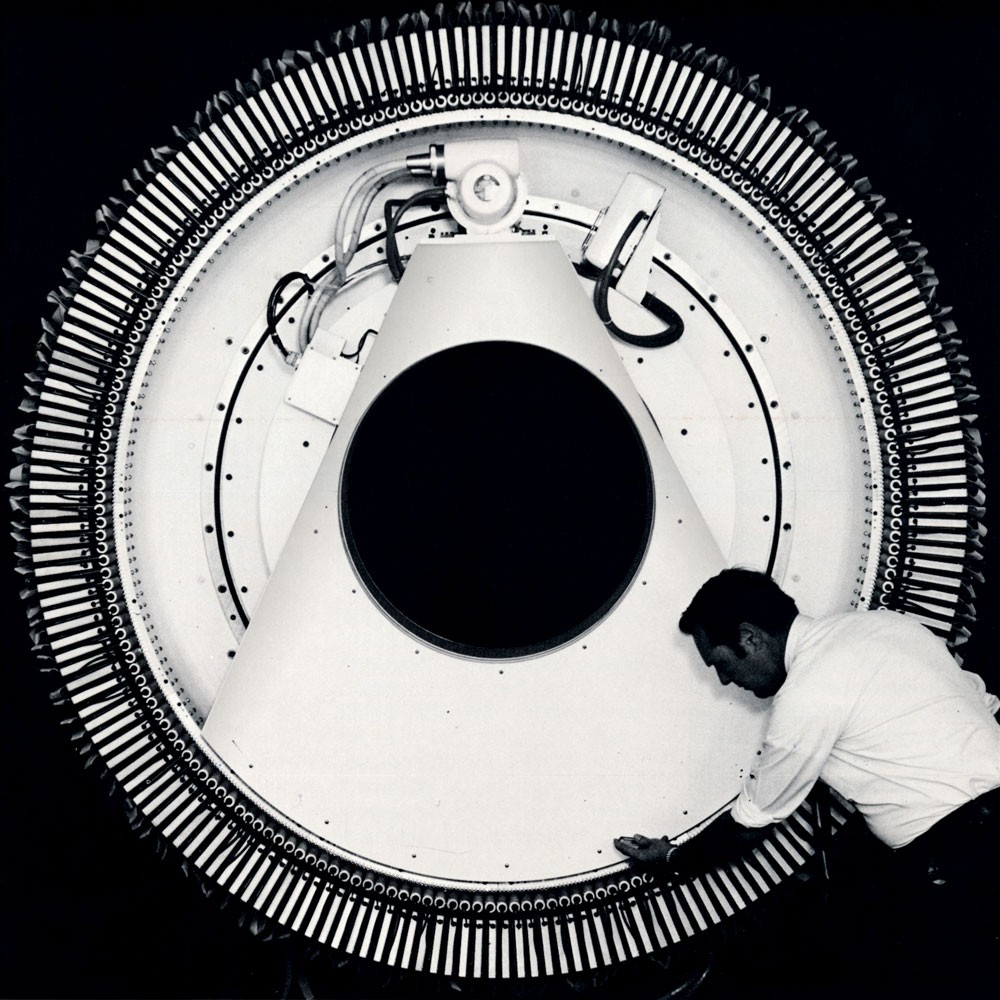
Allan Cormack shared the 1979 Nobel Prize in Physiology or Medicine with Godfrey Hounsfield for the development of computer-assisted tomography. The Johannesburg-born physicist's story is a reminder that a medical advance can depend on mathematical work as much as on a visible piece of equipment.
The basic imaging problem involves measurements collected as X-rays pass through an object from different directions. Calculations can turn those measurements into a representation of a cross-section. Nobel's account credits Cormack with developing necessary calculation methods around 1957, well before the award recognised the wider achievement.
Cormack studied at the University of Cape Town, initially pursuing engineering before turning to physics. His Nobel autobiography describes an early interest in astronomy that encouraged his enthusiasm for mathematics. These changes show a career shaped by related scientific questions rather than a single unchanging course.
He published results relevant to the scanning problem in 1963 and 1964. According to his account, the papers initially attracted little response, and he continued teaching and other research. The later prize should not erase that interval when the importance of the work was less widely recognised.
The shared award also matters. Identifying Cormack's mathematical contribution does not make him the sole creator of every part of a CT scanner. Giving accurate credit means distinguishing calculation methods, engineering development and the eventual systems in which several kinds of expertise came together.
For students, this history offers a concrete reason to take theoretical subjects seriously. An equation can become useful far beyond the setting in which it is first investigated. The 1979 prize records a particular achievement; it also invites curiosity about how abstract reasoning reaches practical tools.