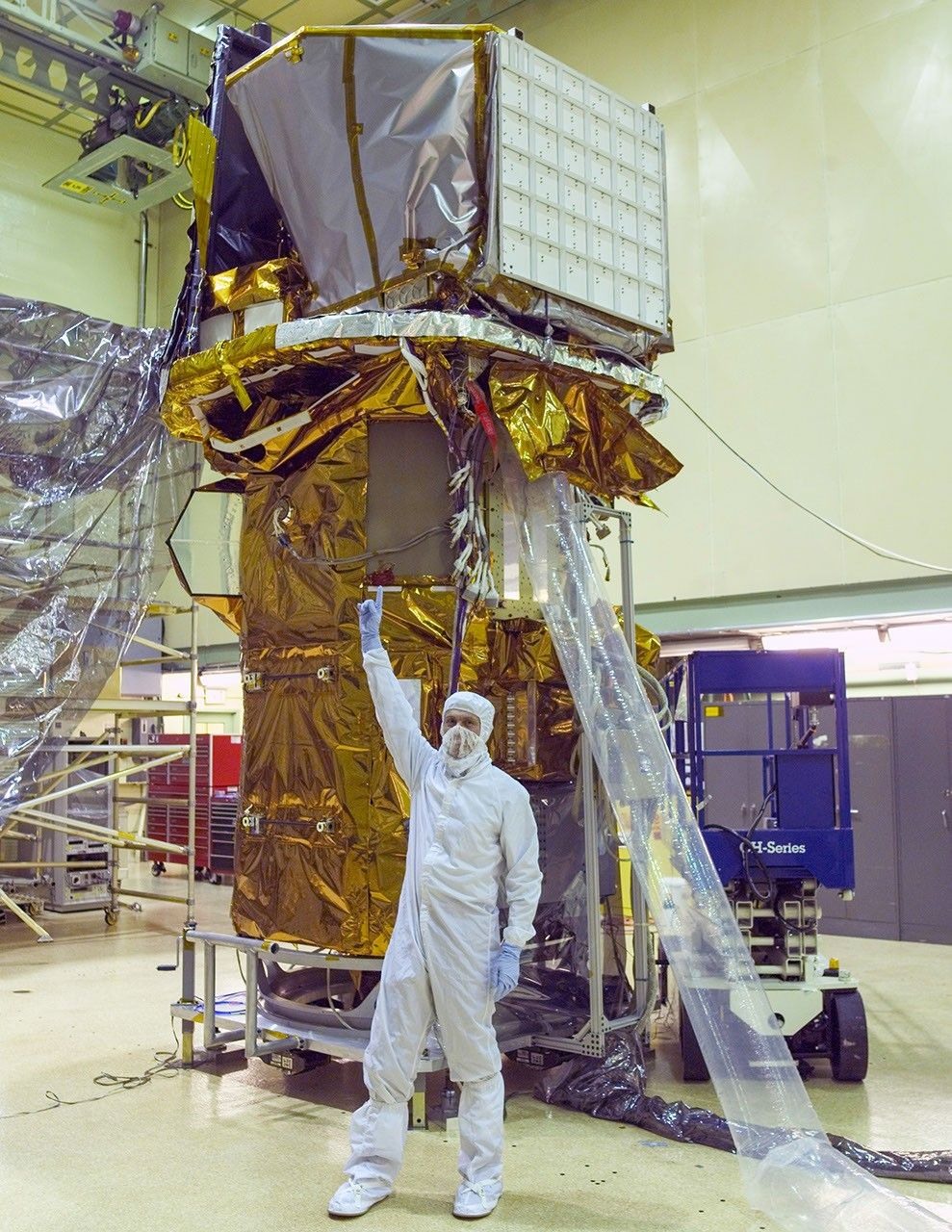
NASA's Neil Gehrels Swift Observatory has ended its science mission. An October 23 announcement says its final observation took place on October 20. The spacecraft's low orbit now exposes it to atmospheric drag that prevents the steady pointing its telescopes need for astronomical observations.
Swift launched in November 2004 to investigate gamma-ray bursts, brief and powerful flashes from the universe. Its special contribution was speed: it could detect a burst, tell other observatories where to look and turn its own instruments toward the fading light soon afterwards.
That rapid response helped scientists investigate events that ordinary observing schedules could easily miss. Swift worked across different wavelengths, combining information from X-rays, ultraviolet light and visible light. Looking at a changing source in several ways gives researchers more evidence than a single image alone.
The mission also observed supernovae, active galaxies and stars disrupted by black holes. Its flexible scheduling let researchers request urgent observations or monitor sources repeatedly. NASA says the archive includes nearly 22 years of measurements and more than 1.5 million ultraviolet and optical images.
Ending observations does not make those records useless. Researchers can compare old events with new discoveries, revisit questions and combine Swift measurements with other missions. The publicly available archive remains part of the observatory's scientific contribution even after the spacecraft can no longer collect useful new observations.
NASA expected re-entry within weeks of its announcement, but that forecast is not confirmation that re-entry has happened. The immediate milestone is the end of science operations. Filling Swift's rapid-response role will involve other instruments and future capabilities, while its existing data continue to support research.