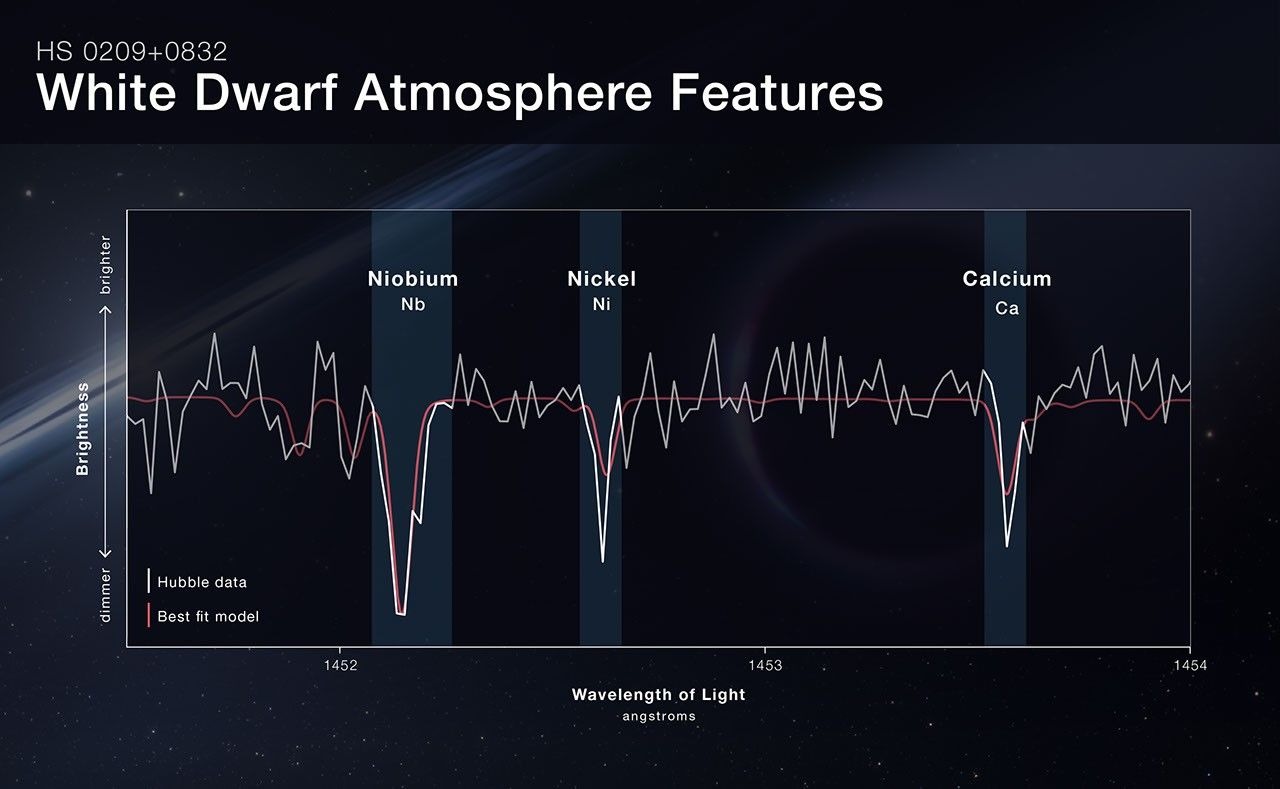
New examination of old Hubble observations raise possibility say planet form from material wey ageing star throw out. NASA October 5 account concern white dwarf HS 0209+0832. The study propose explanation for unusual chemistry; e no be newly photographed world wey telescope directly capture.
White dwarf na compact remnant wey remain after low-mass star lose its outer layers. Most planets wey people know form alongside young stars. The alternative wey researchers propose go form later, using material wey star release as e change into remnant.
Researchers return to spectral features wey telescope record in 1999 with updated chemical database. Several features wey dem no identify before match niobium. Dem also examine data from retired FUSE mission, and those observations support the presence of that element for the system.
TESS measurements show brightness changes wey repeat and fit closely orbiting object. The team suggest say gas giant fit dey lose material into surroundings, helping explain unusual elements wey show for star observations. This still na interpretation of several kinds of evidence, no be full direct view.
The proposed history interesting because e fit give planetary systems another way to begin. But model wey make sense no be the same as measuring every part of the history. Questions still dey about the candidate, how e form and how common similar systems fit be.
More observations go test those questions. The study also show value of archives: old data wey contain unexplained features fit become clearer when researchers get better reference information. The candidate planet remain hypothesis wey measurements support, but its detailed history still need testing.