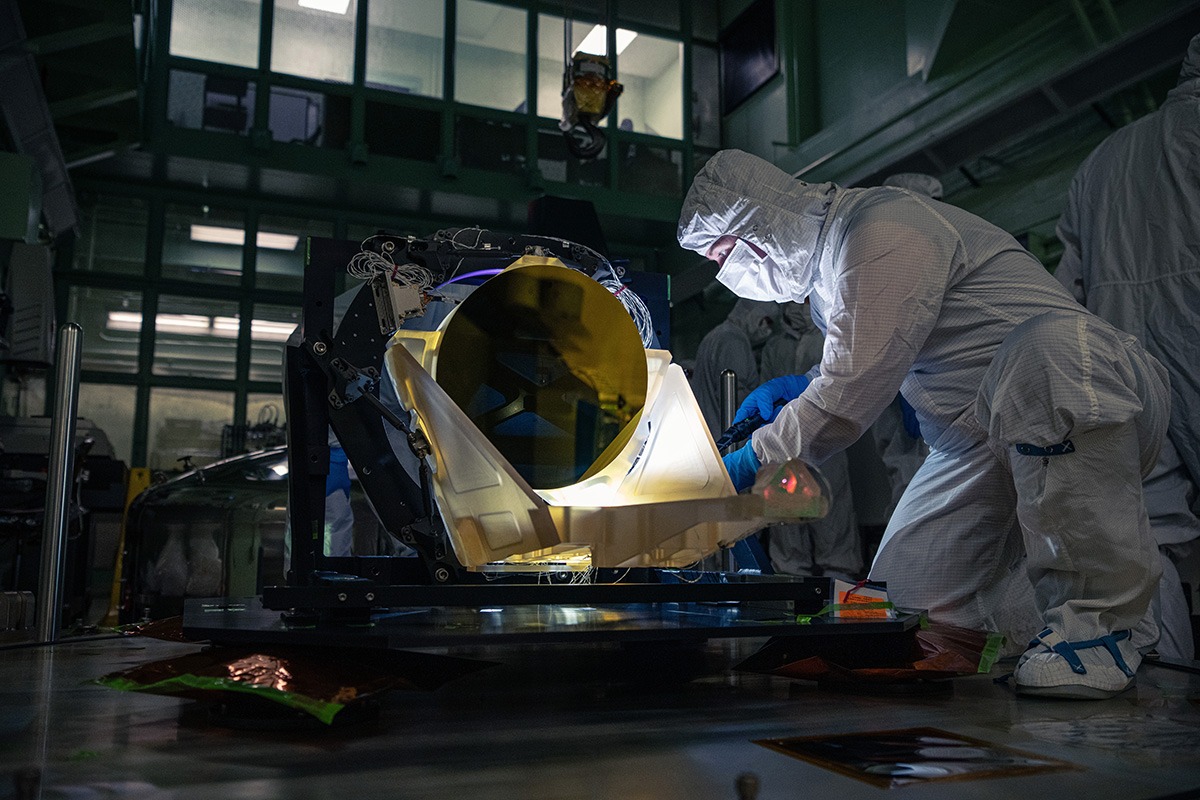
NASA dey advance new engineering test telescope for LISA, the planned gravitational-wave observatory wey Europe lead. October 8 announcement describe next development unit, building on prototype wey dem deliver in 2024. LISA still na future mission, with launch planned for middle of 2030s.
The observatory go use three spacecraft arranged like giant triangle. Laser signals between them go measure very small changes in distance. Those changing distances fit reveal gravitational waves, disturbances associated with moving massive objects, including two black holes wey dey orbit one another.
Each spacecraft need telescopes wey both send and receive laser light. The planned instruments use glass-ceramic material wey dem choose because e resist changing shape when temperature change. Stability matter because unwanted movement fit interfere with the very delicate measurement wey mission need.
The new unit carry lessons from prototype testing into more advanced design. NASA say e go be final unit before flight hardware and optical telescope delivery to ESA. Na engineering milestone, different from completing every piece of equipment wey the whole mission still need.
LISA suppose study gravitational-wave signals for lower frequencies than ground observatories fit easily measure. E go complement those facilities and open another range of events and systems for investigation. The telescope work support that aim, but e no be announcement of gravitational-wave detection by LISA.
So this story concern turning measurement idea into reliable equipment. Tests must show how optics behave before dem produce flight instruments. The photograph show preparation for Earth, where engineers still fit inspect components and fix problems while the equipment remain within reach.