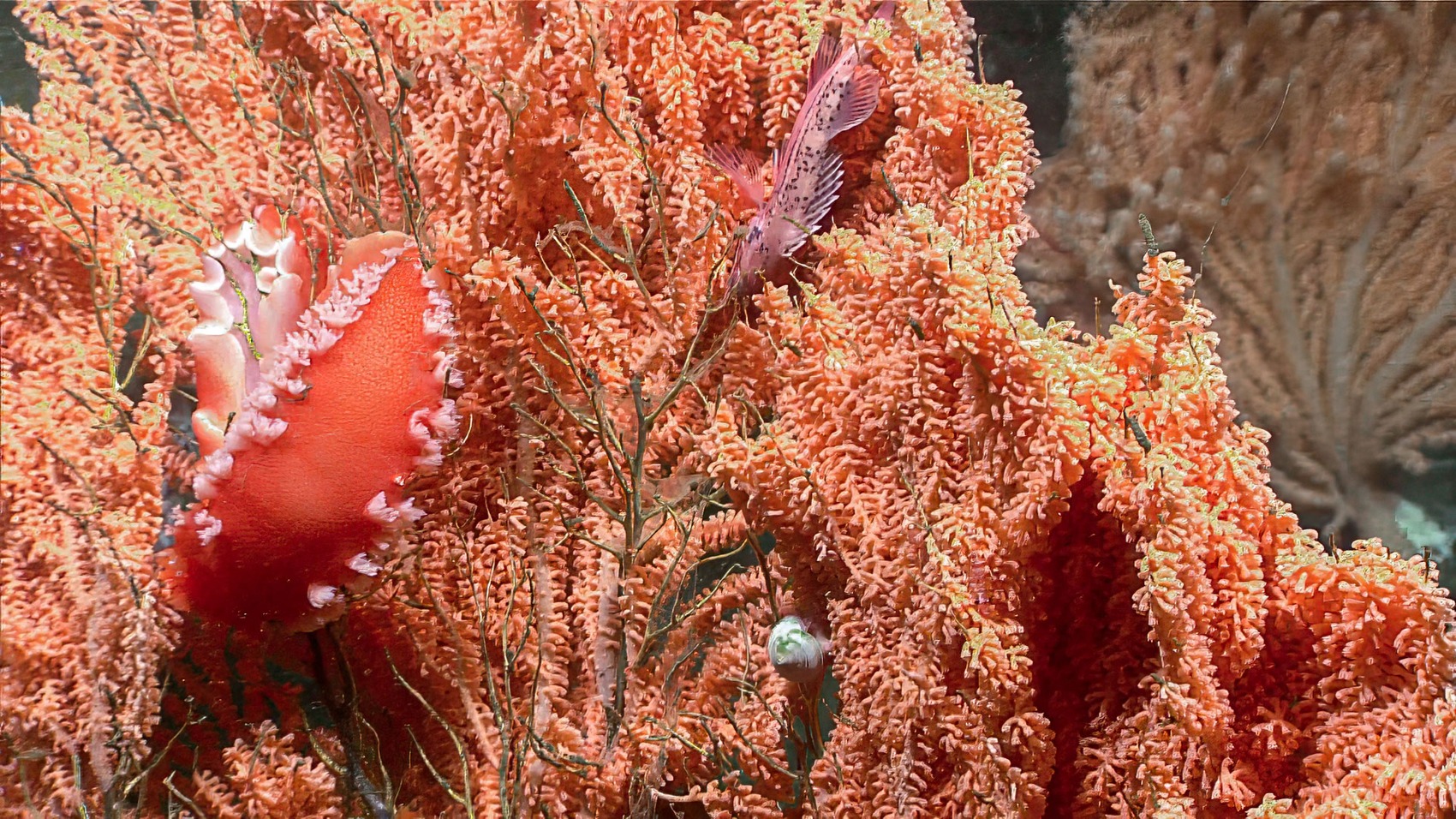
Deep waters around Alaska contain different coral and sponge communities wey scientists never document fully. NOAA account published June 18 explain how researchers analyse 75 hours of expedition video. The work provide baseline for understanding habitats wey dem observe during 2023 Seascape Alaska campaign.
The team record more than 164 different physical forms, wey dem call morphotypes. That word no suppose quietly turn into newly discovered species. Organisms wey look alike fit need more examination before scientists know exact identity. Video show diversity without settling every question about classification.
Many forms appear for only one dive site inside the survey. Researchers also identify eight sites wey meet criteria for high-density vulnerable marine ecosystems. These results concern places wey dem actually examine; no be complete count of everything inside Alaska deep ocean.
The distribution connect especially strongly with currents and water masses, bodies of water wey share temperature, oxygen and other properties. Sites inside similar water conditions fit get comparable communities even when depth different. So depth alone no provide complete explanation for wetin live there.
Corals and sponges also create structures wey other animals use. Knowing where dense communities dey fit support research and stewardship decisions. The study provide ecological evidence. E no automatically announce new protected area or management rule, and e no say every site get the same conservation needs.
The bigger insight na say water wey pass over habitat help shape the life inside am. Future surveys fit test whether similar conditions predict similar communities elsewhere. Archived video remain useful because researchers fit return to old observations and ask questions beyond the expedition first description.