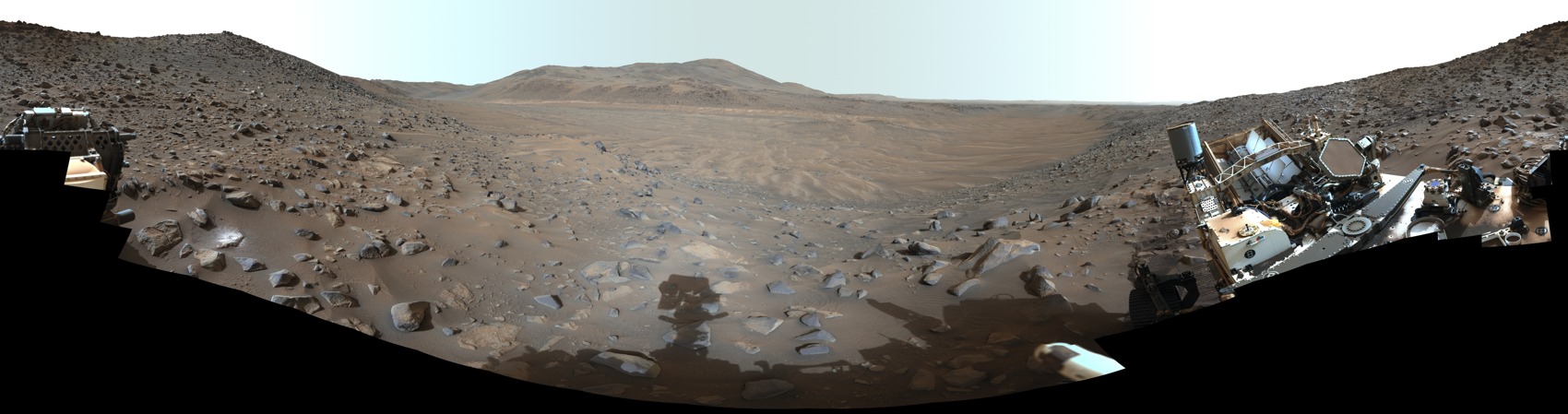
A study described by NASA on October 26 uses an unusual Mars experiment: small pieces of spacesuit material riding on Perseverance. Across 1,645 Martian days, investigators examined dust sticking to these surfaces, turning calibration hardware into evidence for future exploration design.
The rover carries five spacesuit-material swatches, each about 20 millimetres square, on the SHERLOC instrument's calibration target. A separate target for PIXL includes Teflon and basaltic glass. Calibration targets normally help instruments check their measurements; here, accumulated dust supplies another useful signal.
PIXL cannot directly detect the elements making up clean Teflon, so elemental readings from that target reveal material deposited on it. Researchers combined these measurements with observations of other swatches to examine how different surfaces collect fine particles over time.
The detected grains included particles below 2.5 micrometres and others around 100 to 300 nanometres on some surfaces. Sizes varied with the material. Static electrical charging appears to help explain why particular grains stick to particular targets after repeated collisions in Mars' atmosphere.
Driving and drilling could shake off larger clumps, yet the smallest grains remained attached. That distinction matters for equipment: a surface that looks cleaner after disturbance may still carry fine dust. Material selection and protective coatings therefore deserve testing alongside cleaning procedures.
The findings can guide spacesuit and habitat development, including arrangements that keep dusty equipment outside living areas. They do not establish a finished dust-proof suit. The practical advance is direct evidence from Mars showing that adhesion depends on both the particle and the surface.